Online Quran Classes for Students with Down Syndrome
A loving, patient 1-on-1 Quran tutoring approach emphasizing gentle auditory repetition, short Surahs, foundational Duas, and continuous positive encouragement.
Educational Scope & Learning Support Statement
Iqra Quran Center provides accessible, patient, and adaptive Quran education and religious tutoring. Our teachers are experienced Islamic educators, not licensed speech therapists, psychologists, or medical clinicians. Lessons are tailored to support religious learning through individualized educational accommodations, structured routines, and compassionate pacing, designed to complement, not replace, professional therapeutic care.
How We Nurture Quran Learning for Down Syndrome
We believe in the spiritual capacity of every soul. Our gentle pedagogical adaptations include:
Rhythmic Auditory Repetition
Tutors recite short Quranic verses with melodic cadence, allowing students to absorb words naturally through frequent, gentle listening.
Short Surah Focus
Curriculum emphasizes foundational chapters: Surah Al-Fatiha, Al-Ikhlas, Al-Falaq, and An-Nas, giving learners a strong sense of accomplishment.
Daily Kalimas & Duas
Simple, uplifting daily remembrances (SubhanAllah, Alhamdulillah, Allahu Akbar) and basic mealtime and bedtime prayers are taught gently.
Celebratory Positive Praise
Every recitation attempt is met with sincere verbal praise and visual stars, reinforcing confidence and building a warm love for the Quran.
Unrushed Lesson Cadence
There are no performance benchmarks or tests. The student sets the pace, and instructors remain completely patient and unhurried.
Caregiver Partnership
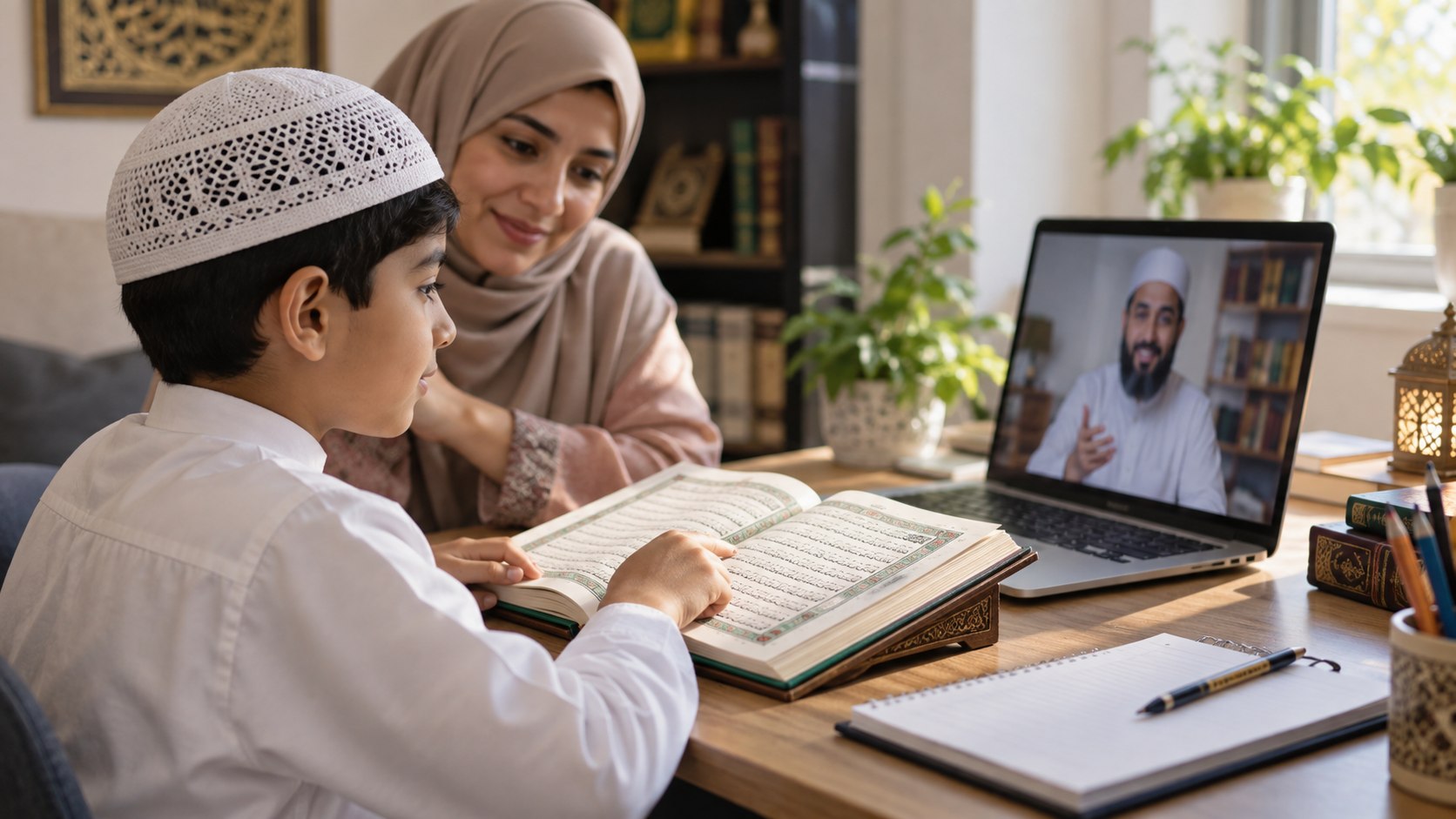
Parents and caregivers are invited to participate actively in lessons, providing a comforting, familiar home presence.
Explore Specialized Quran Learning Accommodations
Compare lesson adjustments for different learners, then discuss a suitable starting point with admissions:
Request a Gentle Free Trial Class
Start with 1 free trial class and see how our one-to-one online Quran classes work. Designed with genuine care around your child’s rhythm. No credit card required.
Match Quran learning to the student’s own strengths
Students with Down syndrome do not share one reading level or communication profile. Some may enjoy recognising written letters, while others prefer listening, repeating or choosing between visual prompts. Before the trial, explain the learner’s interests, current skills and any practical access needs. Agree on a comfortable participation goal rather than comparing the learner with an age-based syllabus.
Prepare a supportive first meeting
- Tell the tutor how the learner understands instructions and communicates a choice.
- Mention any hearing, vision or screen-access adjustments the family already uses.
- Explain whether a familiar adult should help with the device or remain involved in the lesson.
Notice a useful response, with its level of support
Progress may involve recognising a familiar item, following a short sequence or taking part more independently. Record the task, the prompts used and whether the learner chooses to participate again. Speech clarity and understanding should not automatically be treated as the same thing. Discuss any clinical or communication advice with the learner’s own qualified professionals; this service provides religious education.
An example of a learner-led Quran session
The following options can help the family and teacher agree on a suitable starting format.
| Focus | What to discuss or practise |
|---|---|
| Connect | Begin with a familiar greeting, visual item or short recitation. |
| Present | Show a small amount of material with an instruction the learner understands. |
| Respond | Allow the agreed response, including pointing, choosing, listening or reciting. |
| Repeat and close | Revisit a successful task and finish with a clear, predictable cue. |
Frequently Asked Questions
How do tutors teach Quran to students with Down Syndrome?
Tutors emphasize gentle, rhythmic auditory repetition of short Surahs, celebratory visual praise, and slow, loving guidance. Lessons focus on building joyful familiarity with the Quran, memorizing foundational verses, and learning basic prayer Duas at the student’s natural cognitive rhythm.
Can students with Down Syndrome memorize short Surahs?
Yes, Masha’Allah. Many students with Down Syndrome develop strong auditory memory and deep love for recitation. Through unhurried repetition, students can memorize Surah Al-Fatiha, the 3 Quls (Al-Ikhlas, Al-Falaq, An-Nas), and foundational Kalimas.
Can parents join the online lessons?
Always. Parents and caregivers are welcomed as vital partners in every lesson, helping the child feel secure, celebrated, and completely at ease.
Is this considered speech or physical therapy for Down Syndrome?
No. Our classes provide religious education and Quran tutoring. Our tutors are patient Quran educators, not licensed speech therapists, physical therapists, or medical practitioners. Lessons focus on accessible recitation and spiritual connection.