Online Quran Classes for Kids (Ages 4–15)
Patient, interactive 1-on-1 Quran tutoring designed specifically for young minds. We combine authentic Tajweed with encouraging, modern teaching techniques.
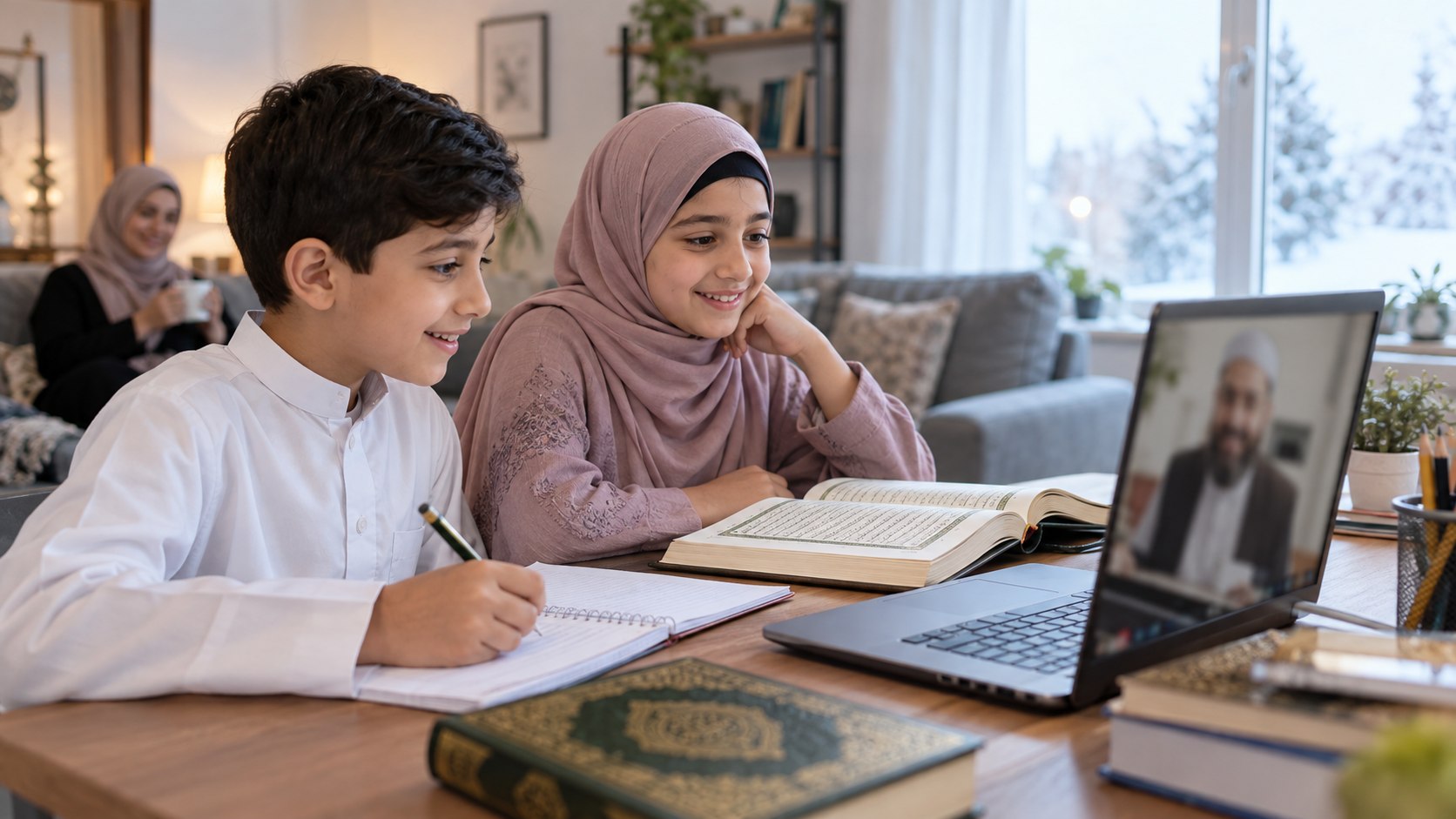
Engaging Teaching Methods
No boring lectures or intimidating methods. We use colorful digital Qaida pages, screen annotation tools, and encouraging praise to make every 30-minute session enjoyable.
Parental Oversight & Communication
Stay updated on your child's learning progression. Receive direct WhatsApp progress summaries from the teacher, attendance updates, and personalized suggestions for home practice.
Safety & Strict Safeguarding
Every teacher undergoes background vetting and signs our Child Safety Charter. Parents may sit in on any session at any time.
The 4-Stage Kids Quran Pathway
A structured, age-appropriate roadmap taking young learners from their first Arabic letter to fluent recitation and prayer.
| Stage | Curriculum Component | What Your Child Learns | Integrated Islamic Studies |
|---|---|---|---|
| Stage 1 (Ages 4–7) | Noorani Qaida & Phonetics | 29 Arabic letters, throat and tongue articulation, joining shapes, and basic vowels. | First Kalima, Bismillah, simple daily Duas (eating, sleeping). |
| Stage 2 (Ages 6–10) | Nazra in Juz Amma | Reciting Surah Al-Fatihah, Surah An-Nas through Surah Al-Fil word-by-word. | How to perform Wudu, steps of Salah (prayer), 6 Kalimas. |
| Stage 3 (Ages 8–13) | Tajweed Application | Practical rules: Ghunnah, Ikhfa, Qalqalah, heavy letters, and stopping signs. | Stories of Prophet Musa, Ibrahim, and Prophet Muhammad (PBUH). |
| Stage 4 (Ages 10–15) | Fluency & Hifz of Key Surahs | Full Mus'haf recitation, memorizing Surah Yaseen, Al-Mulk, Ar-Rahman, and Al-Waqi'ah. | Islamic manners (Akhlaq), honesty, respect for parents and elders. |
Give Your Child the Gift of the Holy Quran
Sign up for our 1 free trial class. Watch how comfortably your child connects with our gentle, instructors in their first lesson.
Choose a class your child can follow with confidence
Children of the same age can have very different reading experience and readiness for a video lesson. Before enrolment, explain what your child can do without help: recognise letters, read short words, follow a line or recite a familiar Surah. The trial should help you choose an appropriate starting task. It should not require a shy child to perform an entire memorised passage on demand.
What parents should watch during the trial
- Does the teacher allow thinking time and correct a mistake calmly?
- Can your child see the shared page and explain which word the teacher is pointing to?
- Is the next practice task clear enough for you to support without teaching the whole lesson yourself?
Track a small skill rather than compare ages
Useful notes include the letters recognised independently, a reading pattern that still needs prompts and a short revision task. For a young beginner, returning willingly and recognising a few letters can be more informative than the number of pages completed. The age bands in the pathway above are a guide, not entry requirements or promised milestones. Move between levels according to reading readiness.
A sample child-friendly Quran session
Discuss the balance of activities with the tutor. A younger child may need shorter tasks and a parent nearby to help with the device.
| Focus | What to discuss or practise |
|---|---|
| Reconnect | Start with a familiar letter, word or short recitation to establish comfort. |
| One new target | Introduce a manageable sound, joining pattern or passage instead of several competing goals. |
| Active practice | Let the child point, choose or read rather than only listen to an adult. |
| Parent handover | Confirm the bookmark, one success and the practice needed before the next lesson. |
Kids Quran Class FAQs
At what age can a child start online Quran classes?
Children can start as early as age 4. For young learners aged 4 to 6, lessons focus on visual letter recognition, interactive phonetics, and short 20-to-30 minute engaging activities that nurture a positive emotional connection with the Quran.
How do you keep children focused and engaged during online lessons?
Our tutors use interactive digital whiteboards, color-coded Qaida slides, animated letter games, and positive reinforcement. Tutors adapt to each child’s mood, breaking lessons into bite-sized segments of recitation, pronunciation games, and brief Islamic stories.
Can parents supervise classes and monitor their child’s progress?
Yes. Parents are warmly encouraged to sit in or observe classes at any time. Tutors provide direct progress feedback via WhatsApp after lessons, sharing milestone updates, attendance notes, and specific recitation areas to practice at home.
What safety measures do you have in place for children?
All tutors undergo identity verification, background screening, and child safeguarding training. Lessons are conducted over secure encrypted video connections, and parents have direct WhatsApp access to administration for any questions or feedback.